
An In - depth Insight into the Extrusion Techniques and materials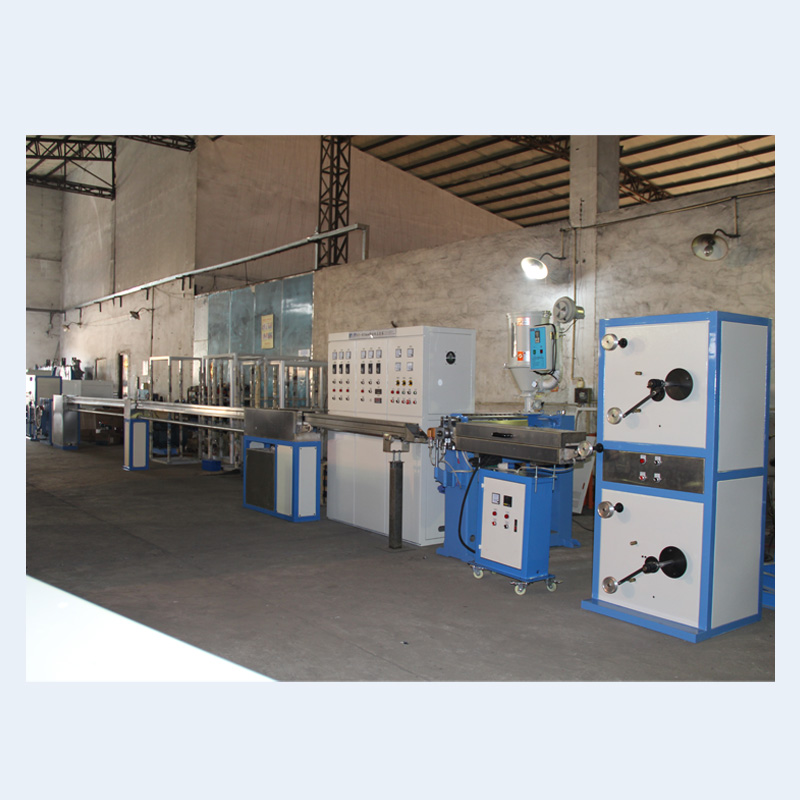 extrusion est une technologie largement employée dans l'industrie de la fabrication de capsules. In this article, we will provide a detailed explanation of the PVC Cable Extrusion Process, including its intricacies, materials used, and key steps involved.
Introduction to PVC Cable Extrusion PVC Cable Extrusion is the Process of Manufacturing cables BY CONTINUOUSLY Forcing the Molten PVC Material through a die to obtain the desired Cable shape and dimensions. This process allows for the Efficient Production of Cables with various Installation and Sheathing Requirements for Different Applications (en anglais seulement). Le processus d'extrusion ensures Consistency and Precision in Cable Manufacturing.
L'utilisation primaire de matériaux dans l'extrusion de câble de PVC est le composé de Chloride de polyvinyle (PVC). C'est un mélange de résines de PVC, plasticizers, Stabilizers, fillers, and other additives. The PVC RESIN provides the necessary Electrical and Mechanical Properties, pourquoi les plastiques Improve Flexibility. Stabilizers ensure the Longevity of the Cable by Protecting it from Heat, rayonnement UV, et oxydation. Fillers Enhance Mechanical Strength, and Additives aid in Specific functions like Flame Retardancy or coloration (en anglais seulement).
Le processus d'extrusion du câble PVC involves several key steps:
Étape 1: préparation matérielle: le composé de PVC est mélangé avec des additifs et la tête d'un modèle de précision, ensuring a Homogeneous Mixture of Materials.
Étape 2: Extrusion: the prepared PVC Compound is Fed into an extruder, who consists of a barrel with a screw (l'extrusion: le composé de PVC préparé est un facteur d'extrusion, qui sont des conseillers d'un barreau avec un écran). La rotation des transports Screw les Compound towards the Die by Applying Pressure and Heat, resulting in its Melting and becoming Molten PVC (en anglais seulement).
Étape 3: Die Design: The Die determines the final Shape, dimensions, and Cross - Sectoral Area of the Cable. Il s'agit d'Achieving the desired Cable Configuration and uniformity.
Étape 4: Cooling and Sizing: After passing through the die, the extruded PVC Cable is cooled Using a water bath or Air Cooling technique. Ce processus solidifie la stabilité dimensionnelle du PVC et des enveloppes mobiles.
Étape 5: Sheathing and Insulation: in some cases, Additional Layers of PVC or other materials may be added for Insulation or Sheathing Purposes (en quelques cas, Layers supplémentaires de PVC ou d'autres matériaux peuvent être ajoutés pour l'installation ou l'isolation). This step Enhances the cable's Electrical and Mechanical Properties, as well as its resistance to external Factors (en anglais seulement)
Étape 6: tests finaux et emballage: les câbles PVC extruded undergo rigorous Quality Control checks to ensure compliance with Industry Standards. Once approved, the cables are packaged and prepared for Shipment to Customers (en anglais seulement).
Overall, the PVC Cable Extrusion Process enables Manufacturers to produce High - quality Cables with precise Specifications and Properties. It offers versatility in Design and allows for the Production of cables suitable for a large range of applications (en anglais seulement)
Concessionthis article has provided a Comprehensive Explanation of the PVC Cable Extrusion Process, covering the materials used, key steps, and Benefits (en anglais seulement). PVC Cable Extrusion is a vital Technique in Cable Manufacturing, Enabling the Production of Reliable and Efficient cables that Meet the diverse requirements of Various Industries.