
Optimal Solutions for Enhancing Power Cable Extruder Performance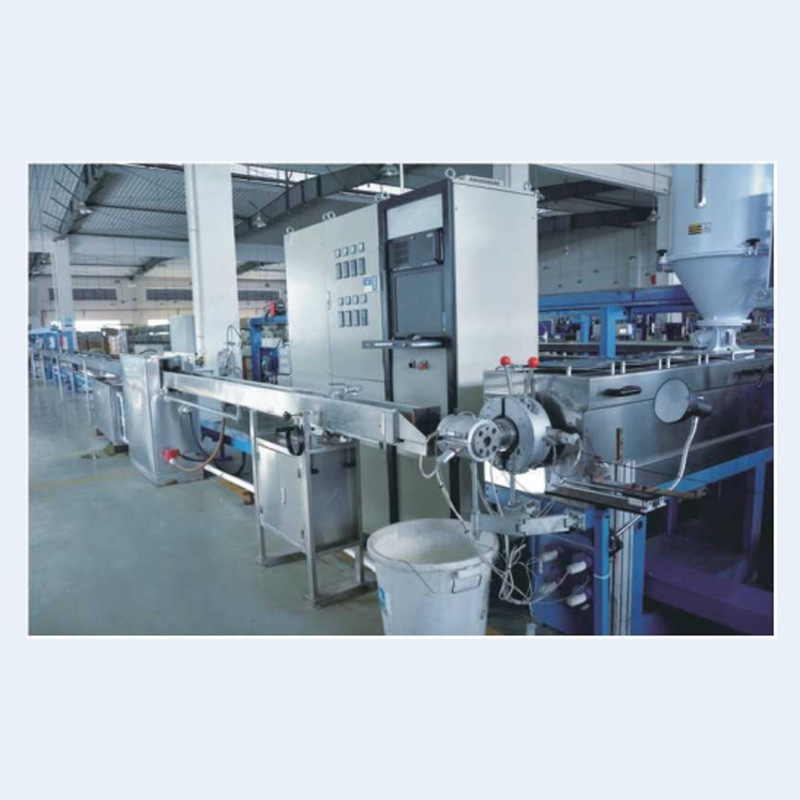 Power cable extruders play a crucial role in the production and insulation of power cables. An efficient and well-designed power cable extruder can greatly enhance the speed and quality of cable manufacturing. In this article,we will explore the optimal design and improvement scheme for power cable extruders,aiming to optimize their performance and overall efficiency.
1. Understanding the Current ChallengesBefore delving into the design improvements,it is important to understand the challenges faced by power cable extruders. The current extrusion process often involves issues such as inadequate cooling,imprecise temperature control,and inconsistent insulation thickness. These challenges can lead to cable defects,reduced productivity,and increased production costs.
2. Design OptimizationIn order to overcome the challenges mentioned above,several design optimizations can be implemented:
Improved Cooling System: Enhancing the cooling system of the extruder is vital for maintaining an optimal operating temperature. This can be achieved by introducing advanced cooling techniques such as water-cooled barrels and high-performance heat exchangers. These improvements will ensure better temperature control,reducing the risk of overheating and cable defects.
Precision Control Systems: Implementing advanced control systems that monitor and regulate key parameters such as temperature,pressure,and speed can significantly enhance the overall performance. These systems allow for precise adjustments,ensuring consistent insulation thickness and reducing material waste.
Enhanced Screw Design: The screw design plays a crucial role in the extrusion process. By optimizing the screw geometry,such as the helix angle and the length-to-diameter ratio,the extruder can achieve better plasticization of the material,leading to improved insulation quality and reduced defects.
3. Process StreamliningIn addition to design optimizations,streamlining the extrusion process can further improve efficiency:
Automated Material Feeding: Implementing automated material feeding systems can reduce operator error and material waste. These systems can accurately measure and deliver the required amount of raw material,ensuring precise cable insulation thickness and minimizing production costs.
Integrated Quality Control: Introducing in-line quality control measures,such as laser gauges or capacitive thickness sensors,can continuously monitor the extruded cable‘s insulation thickness. This enables real-time adjustments and reduces the chances of producing cables with inconsistent insulation.
Efficient Maintenance and Cleaning: Designing extruders with easy access to key components simplifies maintenance and cleaning procedures. This allows for faster changeovers between different cable types,reducing downtime and increasing overall productivity.
In conclusion,by implementing the aforementioned design optimizations and streamlining the extrusion process,power cable extruders can achieve higher efficiency,superior quality control,and increased productivity. These improvements directly contribute to reducing manufacturing costs and ensuring the production of high-quality power cables that meet industry standards.