Optimizing Production Processes for Power Cable Extruders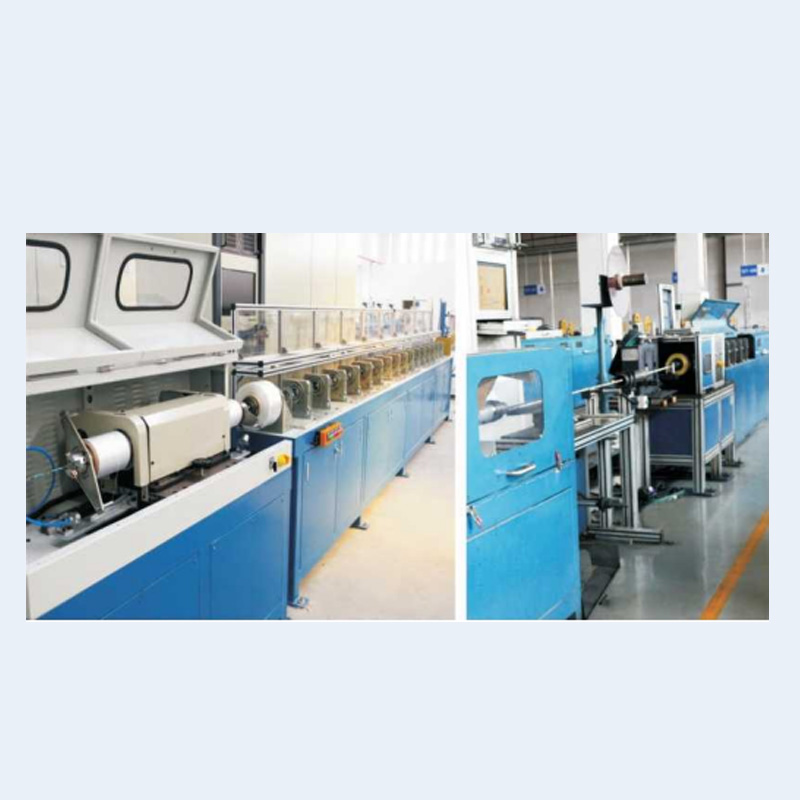 Real-time monitoring and data analysis are crucial for improving the production efficiency of power cable extruders. By adopting advanced technologies and implementing effective strategies,manufacturers can enhance their operations,maximize productivity,and ensure high-quality output. This article explores the significance of real-time monitoring and data analysis in power cable extrusion,highlighting its potential to revolutionize the industry.
1. Real-time Monitoring: A Tool for Continuous Performance EvaluationReal-time monitoring enables manufacturers to gather live data from power cable extruders,providing insights into the ongoing production process. This data can include information on various parameters,such as temperature,pressure,and speed. By continuously analyzing this data,manufacturers can identify any deviations from set parameters and take immediate corrective actions.
Real-time monitoring allows for the early detection of potential issues,such as equipment malfunctions or material inconsistencies. By promptly resolving these issues,manufacturers can minimize downtime and optimize the production workflow. Moreover,real-time monitoring facilitates the identification of performance trends,enabling manufacturers to make data-driven decisions for process optimization and resource allocation.
2. Data Analysis: Unlocking Process Optimization OpportunitiesData analysis plays a vital role in improving the production efficiency of power cable extruders. By analyzing the collected data,manufacturers can gain in-depth insights into their extrusion processes and identify areas for improvement. Advanced data analytics techniques,such as statistical modeling and predictive analytics,can help identify patterns,correlations,and anomalies.
Through data analysis,manufacturers can optimize key factors that affect extrusion efficiency,such as temperature profiles,screw speed,and material composition. By fine-tuning these parameters,manufacturers can minimize waste,reduce defects,and improve overall product quality. Additionally,data analysis can assist in predictive maintenance,allowing for proactive equipment servicing and minimizing unplanned downtime.
3. Integration and Collaborative Platforms: Maximizing EfficiencyThe integration of real-time monitoring systems with collaborative platforms enhances the overall efficiency of power cable extrusion processes. By leveraging the power of the Industrial Internet of Things(IIoT),manufacturers can create a connected ecosystem that enables seamless information exchange and collaboration.
Collaborative platforms facilitate the real-time sharing of data and insights among different stakeholders,such as operators,engineers,and quality control personnel. This promotes effective communication,enables efficient decision-making,and ensures alignment throughout the production process. Additionally,these platforms can provide centralized data storage,allowing for historical analysis and benchmarking.
Ultimately,the integration of real-time monitoring systems and collaborative platforms improves overall equipment effectiveness(OEE)and enables manufacturers to meet production targets with enhanced accuracy,speed,and consistency.
ConclusionReal-time monitoring and data analysis are indispensable tools for enhancing the production efficiency of power cable extruders. By continuously monitoring the production process,analyzing live data,and leveraging advanced analytics techniques,manufacturers can optimize their processes,minimize downtime,reduce waste,and improve product quality. Integration with collaborative platforms further enhances efficiency,promoting seamless information exchange and collaboration among stakeholders. Embracing real-time monitoring and data analysis is essential for power cable extruders to stay competitive in a rapidly evolving industry.