
Unraveling the Intricacies of Power Cable Extrusion: A Comprehensive Guide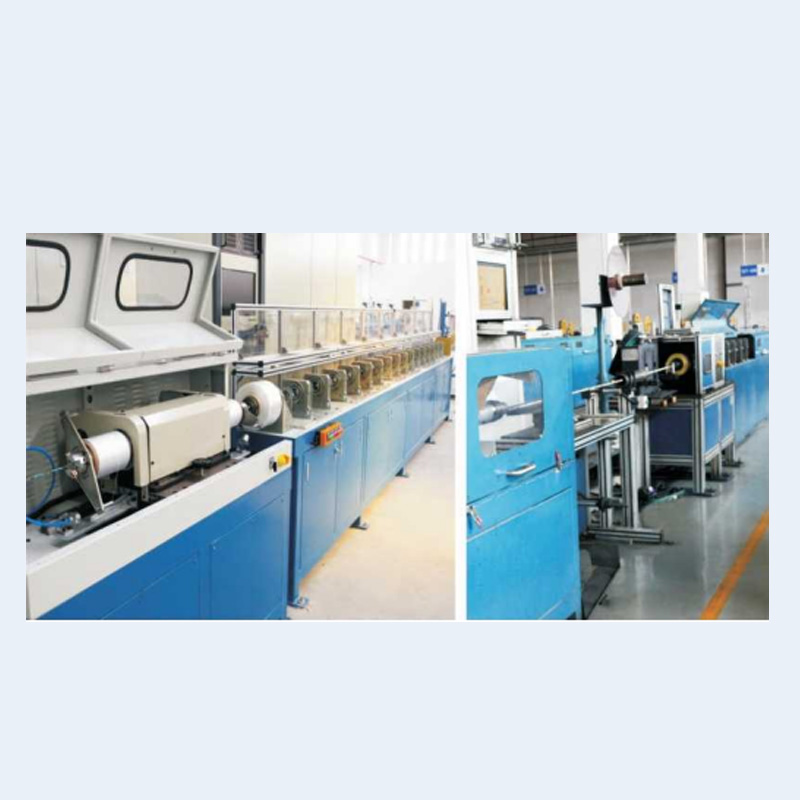 Understand the structure and working principle of the power cable extruder is crucial for individuals involved in the power cable manufacturing industry. This intricate machine plays a significant role in the efficient production of power cables with high quality and durability. In this article,we will delve into the details of the power cable extruder,exploring its structure,components,and working principle.
1. Structure of Power Cable ExtruderThe power cable extruder is a complex piece of machinery composed of several essential components. These include:
1.1 Main Extruder Barrel: The main extruder barrel is the primary component responsible for melting and homogenizing the raw materials used in power cable manufacturing. It consists of a heated cylindrical chamber that facilitates the extrusion process.
1.2 Screw: The extruder screw is the mechanical element used for transporting and mixing the raw materials within the barrel. It operates based on the Archimedean screw principle,where the rotation of the screw propels the material forward while generating the required pressure to form the cable.
1.3 Die Head: The die head is located at the end of the extruder barrel and provides the desired shape and dimensions to the extruded cable. It consists of a specially designed opening known as the die orifice,through which the molten material passes.
1.4 Cooling System: To ensure the cable maintains its shape and properties,a cooling system is integrated into the power cable extruder. Typically,this system employs water cooling to rapidly solidify the extruded cable.
2. Working Principle of Power Cable ExtruderThe power cable extruder operates on a straightforward yet efficient principle:
2.1 Material Preparation: The raw materials,including polymers,fillers,and additives,are accurately measured and mixed in predetermined proportions. These materials are fed into the extruder barrel through a hopper.
2.2 Melting and Homogenization: The extruder barrel houses a heating element,which raises the temperature of the raw materials,causing them to melt and mix thoroughly. The rotating screw facilitates the homogenization process.
2.3 Extrusion: Once the material reaches the desired molten state,it is forced through the die head‘s orifice under high pressure. As it passes through the die,the material takes the shape of the cable and begins to cool down and solidify.
2.4 Cooling and Molding: As the extruded cable leaves the die head,it enters the cooling system,where it rapidly cools down,solidifying into the desired shape. The cable is then passed through various molding devices to enhance its mechanical properties and appearance.
3. ConclusionThe power cable extruder is a crucial machine in the power cable manufacturing industry. Understanding its structure and working principle enables manufacturers to optimize the production process,ensuring high-quality and durable power cables. By comprehending the intricacies of the power cable extruder,manufacturers can stay at the forefront of this ever-evolving industry,delivering efficient and reliable power cables to meet the growing demands of the modern world.